
QUICK NAVIGATION
TL;DR: The Vision Protocol Build
Most goal-setting fails because it lacks architecture. The Vision Protocol treats your year like a software project:
- Requirements: Define your “Perfect Day” with visceral clarity.
- Financials: Run the numbers to see what that life actually costs.
- Sustainability: Sync your output with nature’s four seasons to prevent burnout.
- Automation: Use Motion AI and GTD to get tasks out of your head and into an auto-scheduled system.
- The Golden Rule: Finish what you start. Don’t spread your RAM too thin.
Audio Protocol: Architecting 2026
Deep-dive breakdown of the Vision Protocol system. Best experienced with headphones.
[VIDEO: YouTube Full Version Coming Soon]
Introduction: Stop Patching, Start Architecting
Learning how to set goals for 2026 that actually stick requires you to stop patching your habits and start architecting your entire life system. I’m going to start with a confession: I am no expert in goal setting. I don’t have a PhD in psychology, and I’m not a professional life coach.
But I am a software developer who has spent the last 13 years obsessively debugging my own life. Year after year, I have refined a process that allowed me to transition from a “lost” 20-something to finding absolute clarity in a world designed to distract us.
Most people treat goal setting like a chore list—a series of “bugs” they want to fix. However, in this guide on how to set goals for 2026, we are going to treat your year like a high-availability application.
If you have ever worked in Java, you know that fixing a bug without understanding the architecture is a waste of time. You might patch the error today, but the system will crash again tomorrow because the underlying logic is flawed. You don’t need more resolutions; you need a Vision Protocol.
In this guide, I’m sharing the exact system I use to turn a vague dream into an automated reality using modern technology. We will define the requirements, run the financial numbers, sync with nature’s seasonal clock, and then automate the maintenance so you can focus on executing.
1. The Perfect Day Visualizer: Defining Your Requirements

The logic is simple: If you can see it, you can do it. If you can feel the vision and know exactly what you are after, it provides an internal compass. It gives you direction when things get messy. As we look at how to set goals for 2026, visualization is the first line of code in your new life operating system.
When I do this, I get visceral. I play the movie of my life from start to finish. After my trips to Spain and St. Lucia, my vision changed. I saw the value of movement, high-protein fuel, and a home office that looks out over something green. Once you see it, you stop guessing. You have a “Definition of Done” for your life.
2. Why Learning How to Set Goals for 2026 Requires a Financial Reality Check
Clarity costs money. We live in a capitalist society, so while money can’t buy happiness, it buys the freedom required for your “Perfect Day.” It is highly advantageous to know your numbers clearly so you know exactly what to aim for. Part of knowing how to set goals for 2026 is knowing your overhead.

I run the math on my ideal life with the same precision I use to calculate the complexity of an algorithm. How much does that apartment cost? What is the price of the organic diet I envisioned? This process gets your brain working—it forces you to be creative.
If you haven’t mastered the mindset yet, check out my guide on Strategic Visualization to see how to bridge the gap between your finances and your dreams. You might even be surprised to find that with a little creativity, you can have parts of your vision without spending any money at all.
Case Study: The Homestead Bridge
Let’s look at a real-world example. Suppose you want to live more sustainably. In your “Perfect Day,” you see yourself raising chickens on your own land and knowing exactly where every calorie on your plate comes from.
But currently, you live in an apartment. The Vision Protocol forces you to rachet down the goal: what does land cost? Where do you and your wife actually want to be? What can you start now? Maybe you start an indoor herb garden today. This transforms a “dream” into a series of logical tasks—a key part of how to set goals for 2026 effectively.
3. SMART Goals: Refining the Plan
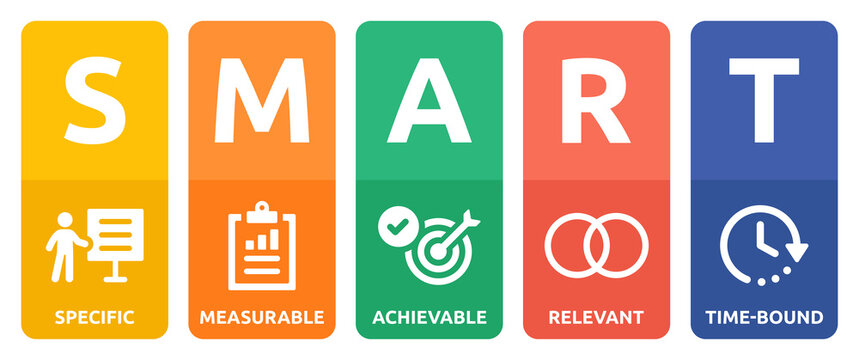
Only after you know what you want and what it costs do you set SMART Goals. This is where you turn the “Why” into the “What.” When researching how to set goals for 2026, you’ll find that specific metrics are the only things that move the needle.
- Specific: “Increase income” is a bug. Requirements must be specific actions.
- Measurable: You know you’ve succeeded when you hit a specific number or milestone.
- Achievable: Focus on things within your control—your skills and your output.
- Relevant: Does this goal actually buy you your “Perfect Day”?
- Time-bound: Give yourself a “Sprint Deadline.” Without a date, it’s just a dream.
4. Nature’s Seasonal Sync: Sustainability Over Burnout
If you want to master how to set goals for 2026, you must respect your internal seasons. Trees rest in the winter so they can spring to life in the summer and capitalize on the sun. Most people are overworked because they try to be in “Summer Mode” (high output) all year.

- Winter (Dec – Feb) – REST: Focus on relationships, sleep an extra hour, and build the vision.
- Spring (Mar – May) – CREATE: Test the “how” and see if the new goals are actually sticking.
- Summer (Jun – Aug) – WORK: This is the relentless phase. Work hard, sleep less, and prioritize output.
- Autumn (Sep – Nov) – ACHIEVE: The final push. We celebrate the wins and transition back to rest.
THE SEASONAL PROTOCOL
A deep dive into Nature’s Productivity Logic. (Link Coming Soon)
5. The Internal Awareness Debugger

Self-awareness is your primary debugger. If you don’t know what you want, you are running someone else’s code. To clear the noise, I take morning walks—no music, no podcasts. I just move and listen. Understanding how to set goals for 2026 starts with knowing your true motivations.
I also identify the “Hell” I am avoiding. What does life look like in 5 years if I do nothing? Then, I categorize my motivations: Petty Reasons (primal ego), Middle Reasons (family), and High Reasons (purpose). You need all three to stay consistent.
6. The Automated Execution Stack: Motion AI and GTD

The final step: Get it out of your head. I use the Getting Things Done (GTD) system paired with Motion AI. Motion takes my tasks and auto-schedules them into time-blocked blocks on my calendar. If you want to know how to set goals for 2026 and actually achieve them, you must remove the friction of scheduling.
TECH STACK REVEAL
How I use Motion AI and GTD to 10x my output. (Link Coming Soon)
Summary: How to Set Goals for 2026 Roadmap
To move from vision to reality, follow these summarized steps from our guide on how to set goals for 2026:
- Define the Requirements: Visualize your “Perfect Day” until you can feel it.
- Crunch the Numbers: Know the exact cost of your vision so you know what to aim for.
- Identify the Bridge: Find the small tasks (like indoor gardening) you can start in your current environment.
- Set SMART Waypoints: Break the big vision into measurable, time-bound sprints.
- Inbox Everything: Move every task into a GTD system to clear your mental RAM.
- Let AI Architect the Schedule: Use Motion AI to automate your time-blocking.
Conclusion: Finish What You Start
The biggest mistake you can make when learning how to set goals for 2026 is spreading yourself too thin. Push through the pain phase. Ignore every other “great idea” until that one thing is finished.
Choose your battles, but focus on your highest priority tasks at the beginning of the day when your energy is high. Your best year yet isn’t something you find; it’s something you architect, install, and—most importantly—finish.
Leave a Reply