
TL;DR: The Top Recommendations
Alright, confession time: remembering to take out the trash is hard enough, let alone keeping up with the ever-mutating digital nasties trying to sneak into your small business. If you’re a growth-stage firm staring down the barrel of 2026, wondering how to protect your hard-earned digital assets without mortgaging the server room, you’re not alone. I’ve been there, staring blankly at jargon-filled security websites, feeling like I needed a degree in advanced cryptography just to choose an antivirus. Good news: I’ve waded through the murky waters so you don’t have to. For the best cybersecurity for small business 2026, our top picks are Bitdefender GravityZone Business Security, Sophos Intercept X Advanced, and Microsoft Defender for Business. They offer robust protection without demanding an army of IT pros or an unlimited budget.
Navigating the Digital Wild West: Why ‘best cybersecurity for small business 2026’ is More Than Just Software
Let’s be blunt: if your small business isn’t thinking about cybersecurity, you’re essentially leaving your back door unlocked with a giant ” valuables inside!” sign flashing neon. And trust me, the digital vandals aren’t getting any less sophisticated as we hurtle towards 2026. The days of a simple antivirus being enough? Long gone, my friend. We’re talking about ransomware that holds your data hostage, phishing scams so convincing your grandma would click them, and zero-day exploits that feel like something out of a sci-fi movie. For growth-stage firms, this isn’t just an IT problem; it’s a business survival issue. A single breach can tank your reputation, empty your bank account, and halt your momentum faster than a Monday morning without coffee.
The good news? You don’t need a Fortune 500 budget to get Fortune 500-level peace of mind. What you need is smart, efficient, and easy-to-manage protection. Solutions that evolve with the threats, scale with your growth, and ideally, don’t require you to become a full-time security analyst. We’ve done the heavy lifting, sifting through the noise to bring you the top contenders for the best cybersecurity for small business 2026, focusing on those sweet spots of robust protection, user-friendliness, and cost-effectiveness. Let’s dive in.
1. Bitdefender GravityZone Business Security

Bitdefender has long been a heavyweight in the cybersecurity arena, and their GravityZone Business Security suite continues that tradition by offering comprehensive, enterprise-grade protection scaled perfectly for small and medium-sized businesses. Think of it as having a highly competent, slightly over-caffeinated security guard for every digital asset you own, from endpoints to servers. It’s designed to be powerful yet remarkably easy to manage, which is a godsend if your IT department consists of “you” and a YouTube tutorial or two.
Key Benefits
- Unified Security Platform: Manages security for workstations, servers (physical and virtual), and mobile devices from a single console. No more juggling multiple dashboards!
- Advanced Threat Protection: Features machine learning, behavioral analysis, and real-time threat intelligence to catch new and evolving threats, including ransomware and zero-day exploits. It’s like having a crystal ball for bad guys.
- Low Resource Consumption: Bitdefender is notorious for being lightweight, meaning it won’t hog your system resources or slow down your team’s workflow. Your old laptop might even forgive you.
- Flexible Deployment: Available as a cloud service (GravityZone Cloud) or on-premise, giving you options based on your infrastructure and comfort level.
- Layered Protection: Includes endpoint security, web protection, firewall, content control, and device control, covering a multitude of attack vectors.
Pricing
Bitdefender GravityZone Business Security typically operates on a per-device, per-year subscription model. Pricing varies significantly based on the number of devices and the specific features/tiers selected (e.g., Business Security, Advanced Business Security, Premium Security). Expect competitive rates, often starting around $50-$70 per device per year for basic packages, with volume discounts and bundles for larger deployments. They frequently offer trial periods, so you can kick the digital tires before committing.
Pros & Cons
| Pros | Cons |
|---|---|
| Robust protection capabilities and relatively light footprint. | Optimizing every granular setting might require a bit of reading. |
| Centralized management console is intuitive, reducing the learning curve. | Support can sometimes be a bit technical for those completely new to security terminology. |
| Fantastic all-rounder that provides excellent value for its price point. |
Check Best Price for Bitdefender GravityZone Business Security →
2. Sophos Intercept X Advanced
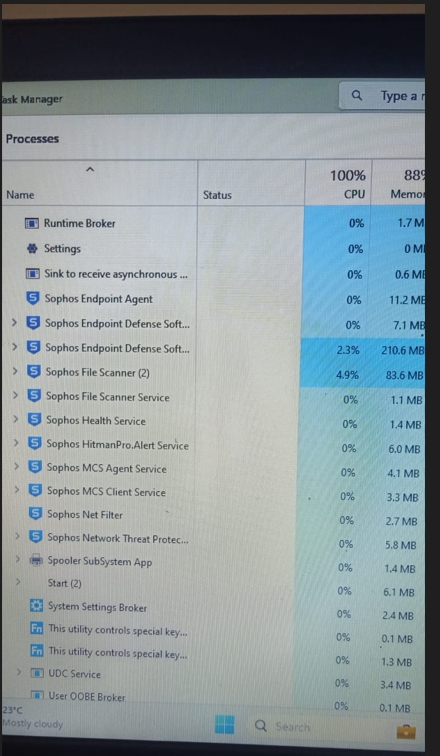
Sophos Intercept X Advanced is for the business that’s not just playing defense but also wants to predict and outmaneuver threats. If Bitdefender is your highly competent security guard, Sophos is more like a seasoned detective with a penchant for artificial intelligence, capable of not just stopping threats but understanding their motives and patterns. It’s particularly strong in next-gen endpoint protection, focusing heavily on AI-driven threat detection and robust anti-ransomware capabilities. For businesses where data integrity and uptime are absolutely non-negotiable, Sophos provides a powerful shield.
Key Benefits
- Cutting-Edge AI/Machine Learning: Utilizes deep learning neural networks to detect both known and unknown malware, often before it even executes. This is future-proofing your security for 2026 and beyond.
- Anti-Ransomware with Rollback: CryptoGuard technology detects and blocks ransomware attacks, then automatically rolls back encrypted files to their safe state. It’s like having an undo button for disaster.
- Exploit Prevention: Stops attack techniques used by exploits, rather than just the malware itself, providing a crucial layer of defense against file-less attacks and zero-day vulnerabilities.
- Synchronized Security: When paired with other Sophos products (like firewalls), it creates a “synchronized security” system where devices can share threat intelligence and respond collaboratively.
- Managed Detection and Response (MDR) Option: For those who need more hands-on security oversight, Sophos offers an MDR service where their experts actively monitor and respond to threats 24/7.
Pricing
Sophos Intercept X Advanced is typically priced on a per-user or per-server basis annually. Given its advanced feature set, it tends to be a bit pricier than entry-level solutions, often ranging from $70-$120 per user/server per year, depending on volume and specific add-ons (like MDR). They offer various tiers, from Standard to Advanced and Endpoint with XDR (Extended Detection and Response), allowing businesses to scale their protection as their needs and budget grow. Quotes are usually customized, so contacting a Sophos partner or sales is often the best first step.
Pros & Cons
| Pros | Cons |
|---|---|
| Proactive, AI-driven defense against the nastiest of modern threats. | Slightly steeper learning curve due to the sheer depth of its features. |
| Excellent anti-ransomware capabilities, providing a strong sense of security. | Higher price tag, might be a stretch for micro-businesses. |
| Centralized Sophos Central console is user-friendly and powerful. | To fully use its synchronized security benefits, you might be nudged towards other Sophos hardware or software. |
3. Microsoft Defender for Business

If your small business is already living and breathing Microsoft 365, then Microsoft Defender for Business isn’t just a strong contender for your cybersecurity needs; it’s practically a no-brainer. This isn’t your grandma’s free Windows Defender; this is an enterprise-grade endpoint security solution tailored for businesses with up to 300 employees, rolling in advanced features that were once exclusive to much larger organizations. It’s deeply integrated into the Microsoft ecosystem, making management a breeze if you’re already using Microsoft’s cloud services.
Key Benefits
- Seamless Microsoft 365 Integration: If you’re using Microsoft 365 Business Premium, it’s already included! Management is handled via the Microsoft 365 admin center, simplifying your tech stack.
- Advanced Endpoint Protection: Offers next-gen protection, endpoint detection and response (EDR) capabilities, automated investigation and remediation, and threat & vulnerability management. It’s a full security toolkit.
- Simplified Configuration: Designed with small businesses in mind, it provides wizard-driven setup experiences and default security policies that are easy to deploy, even for non-IT experts.
- Cross-Platform Support: Protects Windows, macOS, Android, and iOS devices, ensuring comprehensive coverage across your team’s various gadgets.
- Reduced Vendor Sprawl: Consolidating security within your existing Microsoft ecosystem means fewer vendors to manage, fewer bills to pay, and less complexity overall.
Pricing
Microsoft Defender for Business is most commonly acquired as part of the Microsoft 365 Business Premium subscription, which typically costs around $22 per user per month (annual commitment). This bundle also includes other valuable tools like Office apps, SharePoint, Exchange, Teams, and Azure AD. It can also be purchased as a standalone subscription for a lower monthly per-user fee (around $3-$4 per user per month), making it incredibly cost-effective for businesses already invested in or considering the Microsoft ecosystem. This packaging offers exceptional value, providing advanced security that punches well above its price point.
Pros & Cons
| Pros | Cons |
|---|---|
| Profound integration with the Microsoft 365 suite, offering a coherent security story. | Effectiveness is amplified by deep integration; less intuitive if your business relies heavily on a different ecosystem. |
| Enterprise-grade features provide phenomenal protection against a wide array of threats. | Those who need extremely granular, custom security policies might find it slightly less flexible than some dedicated enterprise solutions. |
| Automated investigation and remediation features are particularly useful for lean teams. |
How We Conducted Our Research
Choosing the right cybersecurity suite isn’t like picking a new office chair; the stakes are considerably higher. We didn’t just glance at the marketing brochures and call it a day. Our process involved a deep dive into what growth-stage small businesses actually need, balanced against the ever-evolving threat landscape of 2026. Here’s a peek behind the curtain at our methodology:
- Pricing: Evaluating market value and cost efficiency. This wasn’t just about the lowest sticker price. We looked for solutions that offered the most bang for your buck, understanding that small businesses operate on tighter budgets. This means assessing not just the per-user/per-device cost, but also what’s *included* in that cost. Are advanced features bundled, or are they expensive add-ons? Does the pricing scale fairly as your team grows? We considered the long-term total cost of ownership, avoiding solutions with hidden fees or those that demand significant additional hardware or software investments.
- Features: Identifying the “Must-Haves.” Beyond basic antivirus, we focused on features critical for modern threats: next-gen endpoint protection (AI/ML-driven detection), anti-ransomware capabilities (with rollback options if possible), exploit prevention, and robust firewalls. We also prioritized ease of management, as most small businesses don’t have dedicated IT security teams. Integration with existing business tools (like Microsoft 365 or Google Workspace) was a huge plus, as was cross-platform support for varied employee devices. We wanted solutions that offer holistic protection without creating an administrative nightmare.
- Negatives: Transparent debugging of missing features. No solution is perfect, and any review worth its salt acknowledges the shortcomings. We scrutinize what’s *not* there or what could be better. Is the support lacking for non-technical users? Are certain advanced features buried behind complex configurations? Does it consume too many system resources? Understanding these potential drawbacks helps you make an informed decision based on your specific operational needs and existing IT capabilities. We also looked at potential vendor lock-in and how easily you could migrate if the solution no longer fits your growth trajectory.
- Support: Community and refund policy checks. When something goes wrong (and with technology, it’s often “when,” not “if”), reliable support is invaluable. We evaluated the availability and quality of customer support channels (phone, email, chat, knowledge base). For small businesses, responsive and clear support is crucial. We also considered community forums for peer-to-peer assistance and scrutinized refund policies and trial periods, because you should be able to test-drive your digital defenses before making a full commitment. Furthermore, for comprehensive digital defense, it’s not just about the software but also the human element. Continuous learning is vital; resources like Audible can provide valuable insights into managing risks, leadership, and even the psychology of cybercrime, helping business owners stay ahead. Think of it as intellectual self-defense.
Our goal was to cut through the marketing fluff and provide a grounded, practical assessment, considering the unique challenges and opportunities for growth-stage firms navigating the digital landscape towards 2026. This requires an understanding that small businesses need solutions that are powerful, efficient, and easy to deploy without needing a full-time cybersecurity guru on staff. We also consider the broader ecosystem; for deeper insights into building a truly robust digital presence, our main pillar post on digital security foundations provides an even more comprehensive guide.
Beyond financial data, many small businesses handle sensitive personal information, perhaps even health-related data. Securing this isn’t just good practice; it’s a legal and ethical imperative, especially as discussions around the future of health and data privacy evolve. Moreover, just as we see the rise of innovative models like Sustainable Living as a Service, every new venture, no matter how green or community-focused, needs a bedrock of digital security to thrive sustainably. The threats are real and constantly adapting, requiring small businesses to stay informed and proactive. Resources like the NIST Small Business Cybersecurity Corner offer excellent foundational guidelines, and the CISA resources for small businesses provide actionable steps to enhance your defense.
Conclusion
So, there you have it. Navigating the world of cybersecurity for your growth-stage firm doesn’t have to be a headache that lasts until 2026. While the digital landscape might feel like a never-ending game of whack-a-mole, choosing one of these top-tier security suites – Bitdefender GravityZone Business Security, Sophos Intercept X Advanced, or Microsoft Defender for Business – puts you in a strong position. Each offers a unique blend of protection, ease of use, and scalability, catering to slightly different needs and budgets, but all united by their ability to provide robust defense without requiring an army of IT personnel.
Remember, the best cybersecurity isn’t just about installing software; it’s about fostering a culture of awareness within your team, staying updated, and regularly reviewing your defenses. It’s an ongoing journey, not a one-time destination. But with the right tools in your arsenal, you can focus less on warding off digital goblins and more on what you do best: growing your business. Choose wisely, stay vigilant, and here’s to a secure and prosperous 2026!
Leave a Reply