Tag: Self-awareness

  • Unlock Profound Growth: The Ultimate Guide on How to Gain Psychological Insight

    Decoding the Mind: How to Gain Psychological Insight

    Understanding the hidden architecture of your own mind is the ultimate performance upgrade. If you are wondering how to gain psychological insight, you are already taking the first critical step toward cognitive mastery. It requires moving beyond surface-level reactions and digging into the core operating system of your brain.

    To measure your current baseline, clinical researchers often utilize the psychological insight scale to quantify self-understanding. This data-driven metric helps distinguish authentic cognitive breakthroughs from dangerous pseudo-insight. The latter occurs when you feel a false sense of enlightenment but haven’t actually grasped the root cause of your mental roadblocks.

    True cognitive breakthroughs are deeply rooted in aha moment psychology, representing a sudden neural restructuring that solves complex internal problems. Cultivating deep emotional self-awareness creates the optimal environment for these spontaneous shifts in perspective. Once you map your internal algorithms, you unlock powerful behavioral change triggers that optimize your daily output.

    Resource Hub: Frameworks for How to Gain Psychological Insight

    Resource Hub: Frameworks for How to Gain Psychological Insight

    Cognitive Restructuring

    Explore authoritative studies on neuroplasticity to understand how your brain physically rewires itself during moments of profound realization.

    Emotional Mapping Protocols

    Access our internal guides on emotional intelligence to track, analyze, and optimize your daily psychological fluctuations.

    Habit Engineering

    Learn how to transform newfound self-awareness into actionable, high-performance routines using proven behavioral frameworks.

    TL;DR: You can trigger profound mental breakthroughs on your own by shifting from passive observation to active mental tracking. Avoid fake epiphanies by tying every realization to a concrete action plan.

    Understanding How to Gain Psychological Insight Solo

    Figuring out how to gain psychological insight without stepping foot inside a clinical therapist’s office is the ultimate mind-hacking protocol. It requires stripping away your ego and objectively analyzing your internal operating system.

    Developing deep emotional self-awareness is the foundational step toward self-guided breakthroughs. This taps directly into aha moment psychology, where sudden, sharp clarity rewires your perspective in real-time.

    Practical Applications: How to Gain Psychological Insight Daily

    Practical Applications: How to Gain Psychological Insight Daily

    To practically apply this, you must track your mental patterns using a personal psychological insight scale. By documenting your immediate reactions to high-stress situations, you can quickly map out your core behavioral change triggers.

    This raw data allows you to optimize your daily routines and systematically eliminate toxic mental loops. Once you have the data, you can engineer an environment that forces positive adaptation and consistent growth.

    Action Protocol: Avoiding Common Misconceptions

    Action Protocol: Avoiding Common Misconceptions

    Beware of falling into the dangerous trap of pseudo-insight while analyzing your own mind. This glitch occurs when you intellectually understand a psychological problem but fail to take any corrective action.

    True clarity demands aggressive execution, not just passive observation. If your breakthrough doesn’t change your behavior, it’s just an illusion.

    TL;DR: Intellectual understanding is merely identifying a bug in your mental code. If you want to know how to gain psychological insight, you must experience the emotional shift that forces actual behavioral change.

    The Core Mechanics: How to Gain Psychological Insight

    Knowing your flaws is not the same as fixing them. To truly grasp how to gain psychological insight, you must separate pure logic from deep, structural shifts in your mental framework.

    Many high-performers suffer from what therapists call pseudo-insight. This happens when you can perfectly articulate your bad habits or cognitive biases, yet you change absolutely nothing about your daily routine.

    True understanding bridges the gap between cold, clinical data and raw emotional self-awareness. It is the visceral realization often studied in aha moment psychology, where your brain finally connects cognition to a felt emotional state.

    Practical Applications: How to Gain Psychological Insight Daily

    Practical Applications: How to Gain Psychological Insight Daily

    To measure where you currently stand, clinicians sometimes use tools like the psychological insight scale to quantify your level of self-understanding. However, the most accurate metric of your progress in the real world is your observable action.

    Intellectual understanding keeps you trapped in a loop of endless analysis paralysis. In contrast, genuine insight acts as the ultimate neuroplastic catalyst to upgrade your operating system.

    It produces immediate behavioral change triggers that permanently rewires your default responses. You stop endlessly analyzing why you self-sabotage and simply execute the correct, high-performance protocol.

    How to Gain Psychological Insight: Measuring Growth

    If you want to know how to gain psychological insight, you must move beyond vague feelings and start tracking measurable data. The psychological insight scale offers a precise framework for quantifying your mental and emotional breakthroughs.

    The Core Concept: How to Gain Psychological Insight Systematically

    The Core Concept: How to Gain Psychological Insight Systematically

    Understanding your own mind requires more than just waiting for sudden inspiration to strike. True emotional self-awareness is built through consistent observation, honest self-reflection, and tracking your cognitive patterns.

    Researchers use the psychological insight scale to measure this exact phenomenon in clinical settings. It helps mental health professionals and high-performers alike track the critical transition from mental friction to total clarity.

    Practical Applications in Aha Moment Psychology

    Practical Applications in Aha Moment Psychology

    The real power of this metric lies in its practical, everyday application. When you experience a sudden breakthrough, known in aha moment psychology as an insight experience, your brain is actually forming new neural pathways that bridge your conscious mind with previously suppressed emotional data.

    To systematically capture these breakthroughs and turn them into permanent behavioral change triggers, you must establish an unyielding system of active self-reflection.

    Overcoming the Pseudo-Insight Glitch

    Overcoming the Pseudo-Insight Glitch

    The absolute highest hurdle in cognitive self-directed training is avoiding the trap of pseudo-insight. This structural flaw occurs when your intellectual mind perfectly diagnoses a mental bug, but your emotional operating system remains completely unchanged.

    You can read endless books on performance psychology, but if that knowledge remains purely theoretical, your biological hardware will continue to run the exact same toxic subconscious code. To accelerate your reading comprehension and distill deep psychological frameworks into actionable blueprints, utilizing an AI tool like Recall AI is an exceptional way to organize your mental insights. For those looking to absorb these cognitive mastery frameworks while maintaining a high-output physical routine, listening to behavioral neuroscience classics on Audible will keep your mind sharply calibrated.

    True insight requires an emotional catalyst that forces immediate, real-world execution. Just as building wealth requires moving past financial theory by setting up automated compounding systems through an app like Acorns, building a high-performance mind requires hardcoding automated behavioral shifts into your day.

    Activating Behavioral Changes: The Micro-Protocol

    Activating Behavioral Changes: The Micro-Protocol

    To successfully scale your results on the psychological insight scale and leave baseline behavior behind, you must execute a strict, data-driven daily protocol:

    • The Tracking Protocol: The moment you experience an emotional trigger or acute stress response, document the exact antecedent. Do not analyze it yet—simply record the raw data of your immediate physical and mental reactions.

    • The Aha Moment Trigger: Cross-reference these emotional patterns during your dedicated weekly reflection blocks. Look for the underlying core beliefs driving the behavior, moving beyond surface-level justification to achieve true neural restructuring.

    • The Action Blueprint: Tie every singular psychological breakthrough to a mandatory, physical action step within 24 hours. If you realize a cognitive distortion is causing you to procrastinate on a critical task, immediately time-block a non-negotiable 90-minute focus window to break the loop. To see how to align your cognitive breakthroughs with elite workflow design, check out our comprehensive guide on building sustainable productivity systems.

    Conclusion: Continuous Cognitive Mastery

    Conclusion: Continuous Cognitive Mastery

    The hidden architecture of your mind is not a permanent, unchangeable landscape. It is highly plastic software waiting to be optimized, refactored, and upgraded. By shifting from a passive observer of your flaws to an active engineer of your internal code, you bypass endless analysis paralysis.

    Stop allowing deep-seated mental loops to dictate your daily output and suppress your performance metrics. Run the diagnostic tests, track your cognitive patterns relentlessly, and back every single psychological breakthrough with ruthless real-world execution. If you are ready to expand your self-guided optimization to cover both mental clarity and biological health metrics, explore our clinical blueprint on balancing peak performance and personal finance systems. Your mind is your ultimate operating system—it is time to upgrade the software.

  • 7 Proven Ways to Master Your Seasonal Productivity System for Unstoppable Success in 2026

    TL;DR: The Seasonal Productivity System

    Most high-performers fail because they try to run their “Summer” code all year long. This protocol treats your energy like a server resource:

    • Winter (Dec-Feb): System maintenance, sleep, and architecting the vision.
    • Spring (Mar-May): Beta testing your goals and optimizing the workflow.
    • Summer (Jun-Aug): High-availability execution. Leaving it all on the table.
    • Autumn (Sep-Nov): The final deployment and harvest. Winding down for reflection.

    Introduction: Stop Patching, Start Architecting

    Implementing a Seasonal Productivity System is the missing link in your 2026 strategy. If you’ve been following my work, you know I view life through the lens of a software developer. I don’t see habits; I see algorithms. I don’t see failures; I see unhandled exceptions. But there is one major bug I see in almost every “hustle culture” framework: the assumption that humans are hardware designed to run at 100% CPU usage, 365 days a year.

    If you try to run a server at max capacity without a cooling system, it’s going to throttle. Eventually, it will melt. Your brain is no different. Most people treat goal setting like a chore list—a series of “bugs” they want to fix.

    However, in this guide, we are going to treat your year like a high-availability application. If you have ever worked in Java, you know that fixing a bug without understanding the architecture is a waste of time. You might patch the error today, but the system will crash again tomorrow because the underlying logic is flawed. You don’t need more resolutions; you need a Seasonal Productivity System.

    I’m sharing the exact system I use to turn a vague dream into an automated reality using modern technology. We will define the requirements, run the numbers, and sync with nature’s seasonal clock so you can focus on executing without the threat of burnout.

    The Philosophy of Seasonal Architecture

    The Philosophy of Seasonal Architecture

    The concept of life cycles isn’t new, but we’ve largely forgotten it in the age of fiber-optic internet. I first started reflecting on this idea during a period of intense burnout. I realized that the trees, the animals, and the very light from the sun followed a rhythm I was ignoring.

    This is a strategy used by some of the most influential minds in personal development. For instance, Tony Robbins and John Maxwell often talk about the “patterns” of life and the seasons of success. This wisdom underpins the effectiveness of a Seasonal Productivity System.

    What if you could apply this to your calendar year? Not in the sense that we copy nature exactly, but that we pre-determine times within the year for specific types of output. This strategy takes burnout out of the equation because it builds the “cooling system” directly into the schedule. If you want to know how to set goals for 2026 effectively, you must realize that you cannot be in “Summer Mode” all year.

    Seasonal Productivity System nature cycle

    1. Winter: The Architect’s Deep Sleep (Dec – Feb)

    1. Winter: The Architect’s Deep Sleep (Dec – Feb)

    In the winter months, I rest. I prioritize sleep, fun, relationships, and doing things I truly love. I am still working towards my goals, but the priority is System Maintenance. If there is a conflict, I go with the top priority—rest—over work during this period.

    This is the time to forget the alarm clock or give yourself an extra hour or two. You aren’t being lazy; you are consolidating your “RAM.” This is also the period where I perform my Strategic Visualization. I get really clear on what I want and determine the “Definition of Done” for the next twelve months. Once you have a clear plan, you stop guessing. You have a compass for when the “Summer” intensity hits, a crucial component of your Seasonal Productivity System.

    2. Spring: The Beta Testing Phase (Mar – May)

    2. Spring: The Beta Testing Phase (Mar – May)

    In spring, the focus shifts to Creating. This is where we get organized. It involves cleaning your environments—both physical and digital—and beginning to execute the plans you laid out in the winter architecture phase.

    Think of this as a Beta test. You are trying out your new ideas, getting feedback, and making educated adjustments. You are starting to work a little more, but rest is still highly prioritized. This period is for optimization. If a habit isn’t working, debug it now before the “Production” environment of summer begins, perfecting your Seasonal Productivity System.

    3. Summer: High-Availability Execution (Jun – Aug)

    3. Summer: High-Availability Execution (Jun – Aug)

    By June, we have optimized our plans and are in full action. This is the “Working” phase of the Seasonal Productivity System. During this time, I leave it all on the table. This is the period of relentless pursuit.

    In Summer Mode, work consumes you. You prioritize work over almost everything else. While I recommend sleeping for health reasons, this is the phase where it’s not out of the ordinary to sacrifice a little sleep to hit a major milestone.

    Because you rested so deeply in the winter, your battery capacity is at 100%. You should see massive progress toward your goals here. If you set clear SMART goals in January, you will know exactly how to measure your success during this sprint.

    4. Autumn: The Final Deployment (Sep – Nov)

    4. Autumn: The Final Deployment (Sep – Nov)

    Autumn is the final push. For me, this time centers around my birthday, which acts as a natural signifier to start winding down for the year. From September to mid-November, I am still in “Execute” mode, finishing what I started in the summer.

    However, the last half of November is the window for Reflection. I look at what worked and what didn’t. I celebrate the wins. Celebration is vital—if you don’t reward the “machine” for its hard work during the summer, it won’t want to perform for you next year. This is where you transition back to prioritizing relationships and preparing for the winter rest cycle again, ensuring the longevity of your Seasonal Productivity System.

    THE SEASONAL PROTOCOL CALLOUT

    Don’t spread your mental RAM too thin. Choose one major objective for the Summer phase and execute with 100% focus. (Full deep-dive coming soon).

    5. The Internal Awareness Debugger

    5. The Internal Awareness Debugger

    Self-awareness is your primary debugger. If you don’t know what you want, you are running someone else’s code. To clear the noise, I take morning walks—no music, no podcasts. I just move and listen. Understanding how to set goals for 2026 starts with knowing your true motivations.

    I also identify the “Hell” I am avoiding. What does life look like in 5 years if I do nothing? Then, I categorize my motivations:

    • Petty Reasons: Primal ego (I want to win).
    • Middle Reasons: Family (I want them to be safe).
    • High Reasons: Purpose (I want to change the world).

    You need all three to stay consistent through the “Summer” grind.

    6. The Automated Execution Stack: Motion AI and GTD

    6. The Automated Execution Stack: Motion AI and GTD

    The final step in the Seasonal Productivity System is to remove the friction of scheduling. I use the Getting Things Done (GTD) system paired with Motion AI.

    I put every task into the system, and Motion AI auto-schedules them into my calendar. When I am in “Summer Mode,” I allow the AI to fill my calendar to capacity. When I transition to “Winter Mode,” I manually adjust the settings to ensure I have large blocks of white space for rest. This ensures that I am actually executing the plan I architected, rather than just “feeling” busy.

    TECH STACK REVEAL

    How I use Motion AI and GTD to 10x my output. (Link Coming Soon)

    Summary: Your Seasonal Architecture Roadmap

    To move from vision to reality, follow these summarized steps from our guide on the Seasonal Productivity System:

    1. Winter (Dec-Feb): Define requirements and visualize the “Perfect Day.” Rest deeply.
    2. Spring (Mar-May): Beta test your goals. Clean your environment and optimize your workflows.
    3. Summer (Jun-Aug): Go into full production. Prioritize work and relentless pursuit.
    4. Autumn (Sep-Nov): The harvest. Finalize your projects, reflect on the data, and celebrate.
    5. Automate: Use Motion AI to handle the scheduling so you can focus on the logic of your life.

    Conclusion: Finish What You Start

    The biggest mistake you can make when learning how to set goals for 2026 is spreading yourself too thin. Push through the pain phase of the summer. Ignore every other “great idea” until that one thing is finished. Your best year yet isn’t something you find; it’s something you architect, install, and—most importantly—finish.

    EXPLORE THE ARCHIVE →

  • Master How to Set Goals for 2026: The Ultimate Vision Protocol for Your Best Year Yet

    Master How to Set Goals for 2026: The Ultimate Vision Protocol for Your Best Year Yet

    TL;DR: The Vision Protocol Build

    Most goal-setting fails because it lacks architecture. The Vision Protocol treats your year like a software project:

    • Requirements: Define your “Perfect Day” with visceral clarity.
    • Financials: Run the numbers to see what that life actually costs.
    • Sustainability: Sync your output with nature’s four seasons to prevent burnout.
    • Automation: Use Motion AI and GTD to get tasks out of your head and into an auto-scheduled system.
    • The Golden Rule: Finish what you start. Don’t spread your RAM too thin.

    Audio Protocol: Architecting 2026

    Deep-dive breakdown of the Vision Protocol system. Best experienced with headphones.

    [VIDEO: YouTube Full Version Coming Soon]

    Introduction: Stop Patching, Start Architecting

    Learning how to set goals for 2026 that actually stick requires you to stop patching your habits and start architecting your entire life system. I’m going to start with a confession: I am no expert in goal setting. I don’t have a PhD in psychology, and I’m not a professional life coach.

    But I am a software developer who has spent the last 13 years obsessively debugging my own life. Year after year, I have refined a process that allowed me to transition from a “lost” 20-something to finding absolute clarity in a world designed to distract us.

    Most people treat goal setting like a chore list—a series of “bugs” they want to fix. However, in this guide on how to set goals for 2026, we are going to treat your year like a high-availability application.

    If you have ever worked in Java, you know that fixing a bug without understanding the architecture is a waste of time. You might patch the error today, but the system will crash again tomorrow because the underlying logic is flawed. You don’t need more resolutions; you need a Vision Protocol.

    In this guide, I’m sharing the exact system I use to turn a vague dream into an automated reality using modern technology. We will define the requirements, run the financial numbers, sync with nature’s seasonal clock, and then automate the maintenance so you can focus on executing.

    1. The Perfect Day Visualizer: Defining Your Requirements

    1. The Perfect Day Visualizer: Defining Your Requirements

    The logic is simple: If you can see it, you can do it. If you can feel the vision and know exactly what you are after, it provides an internal compass. It gives you direction when things get messy. As we look at how to set goals for 2026, visualization is the first line of code in your new life operating system.

    When I do this, I get visceral. I play the movie of my life from start to finish. After my trips to Spain and St. Lucia, my vision changed. I saw the value of movement, high-protein fuel, and a home office that looks out over something green. Once you see it, you stop guessing. You have a “Definition of Done” for your life.

    2. Why Learning How to Set Goals for 2026 Requires a Financial Reality Check

    Clarity costs money. We live in a capitalist society, so while money can’t buy happiness, it buys the freedom required for your “Perfect Day.” It is highly advantageous to know your numbers clearly so you know exactly what to aim for. Part of knowing how to set goals for 2026 is knowing your overhead.

    Set goals for 2026 financial planning

    I run the math on my ideal life with the same precision I use to calculate the complexity of an algorithm. How much does that apartment cost? What is the price of the organic diet I envisioned? This process gets your brain working—it forces you to be creative.

    If you haven’t mastered the mindset yet, check out my guide on Strategic Visualization to see how to bridge the gap between your finances and your dreams. You might even be surprised to find that with a little creativity, you can have parts of your vision without spending any money at all.

    Case Study: The Homestead Bridge

    Let’s look at a real-world example. Suppose you want to live more sustainably. In your “Perfect Day,” you see yourself raising chickens on your own land and knowing exactly where every calorie on your plate comes from.

    But currently, you live in an apartment. The Vision Protocol forces you to rachet down the goal: what does land cost? Where do you and your wife actually want to be? What can you start now? Maybe you start an indoor herb garden today. This transforms a “dream” into a series of logical tasks—a key part of how to set goals for 2026 effectively.

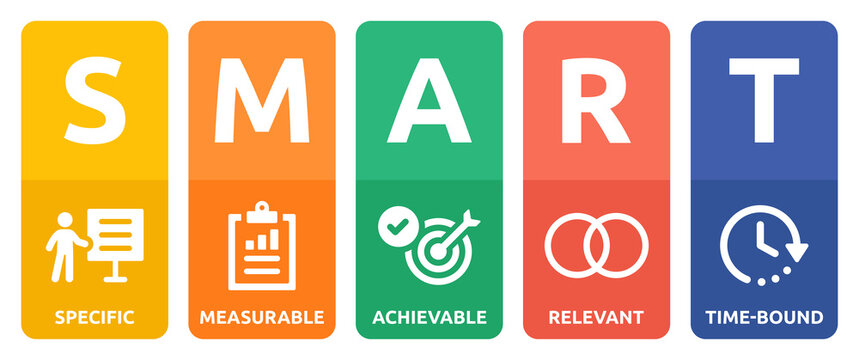
    3. SMART Goals: Refining the Plan

    3. SMART Goals: Refining the Plan

    Only after you know what you want and what it costs do you set SMART Goals. This is where you turn the “Why” into the “What.” When researching how to set goals for 2026, you’ll find that specific metrics are the only things that move the needle.

    • Specific: “Increase income” is a bug. Requirements must be specific actions.
    • Measurable: You know you’ve succeeded when you hit a specific number or milestone.
    • Achievable: Focus on things within your control—your skills and your output.
    • Relevant: Does this goal actually buy you your “Perfect Day”?
    • Time-bound: Give yourself a “Sprint Deadline.” Without a date, it’s just a dream.

    4. Nature’s Seasonal Sync: Sustainability Over Burnout

    If you want to master how to set goals for 2026, you must respect your internal seasons. Trees rest in the winter so they can spring to life in the summer and capitalize on the sun. Most people are overworked because they try to be in “Summer Mode” (high output) all year.

    Nature seasonal cycle for setting goals in 2026

    • Winter (Dec – Feb) – REST: Focus on relationships, sleep an extra hour, and build the vision.
    • Spring (Mar – May) – CREATE: Test the “how” and see if the new goals are actually sticking.
    • Summer (Jun – Aug) – WORK: This is the relentless phase. Work hard, sleep less, and prioritize output.
    • Autumn (Sep – Nov) – ACHIEVE: The final push. We celebrate the wins and transition back to rest.

    THE SEASONAL PROTOCOL

    A deep dive into Nature’s Productivity Logic. (Link Coming Soon)

    5. The Internal Awareness Debugger

    5. The Internal Awareness Debugger

    Self-awareness is your primary debugger. If you don’t know what you want, you are running someone else’s code. To clear the noise, I take morning walks—no music, no podcasts. I just move and listen. Understanding how to set goals for 2026 starts with knowing your true motivations.

    I also identify the “Hell” I am avoiding. What does life look like in 5 years if I do nothing? Then, I categorize my motivations: Petty Reasons (primal ego), Middle Reasons (family), and High Reasons (purpose). You need all three to stay consistent.

    6. The Automated Execution Stack: Motion AI and GTD

    6. The Automated Execution Stack: Motion AI and GTD

    The final step: Get it out of your head. I use the Getting Things Done (GTD) system paired with Motion AI. Motion takes my tasks and auto-schedules them into time-blocked blocks on my calendar. If you want to know how to set goals for 2026 and actually achieve them, you must remove the friction of scheduling.

    TECH STACK REVEAL

    How I use Motion AI and GTD to 10x my output. (Link Coming Soon)

    Summary: How to Set Goals for 2026 Roadmap

    To move from vision to reality, follow these summarized steps from our guide on how to set goals for 2026:

    1. Define the Requirements: Visualize your “Perfect Day” until you can feel it.
    2. Crunch the Numbers: Know the exact cost of your vision so you know what to aim for.
    3. Identify the Bridge: Find the small tasks (like indoor gardening) you can start in your current environment.
    4. Set SMART Waypoints: Break the big vision into measurable, time-bound sprints.
    5. Inbox Everything: Move every task into a GTD system to clear your mental RAM.
    6. Let AI Architect the Schedule: Use Motion AI to automate your time-blocking.

    Conclusion: Finish What You Start

    The biggest mistake you can make when learning how to set goals for 2026 is spreading yourself too thin. Push through the pain phase. Ignore every other “great idea” until that one thing is finished.

    Choose your battles, but focus on your highest priority tasks at the beginning of the day when your energy is high. Your best year yet isn’t something you find; it’s something you architect, install, and—most importantly—finish.

    Explore more protocols in The Archive →