The Interactive Vision Protocol 2026 is more than just a financial tool; it’s your ultimate life dashboard, designed to empower you to architect your future with precision and clarity. In an increasingly complex world, having a clear roadmap to your ideal life and financial independence is not just a luxury—it’s an absolute necessity. This protocol provides the framework to turn your aspirations into actionable, measurable goals.
Financial Freedom Engine
Phase 1: Know Thy Numbers
At the heart of the Interactive Vision Protocol 2026 lies the Financial Freedom Engine, a robust calculator that demystifies the path to financial independence. It’s designed to help you understand your current financial standing and project your future needs with remarkable accuracy.
Current Monthly Expenses
Protocol Standby…
Monthly Survival Cost
$0
Survival Fund Required
$0
Vision Capital (Perfect Day)
$0
Protocol Analysis: Bridging the Gap with the Interactive Vision Protocol 2026
This powerful component of the Interactive Vision Protocol 2026 acts as a reality check. It uses the 4% Rule—a standard for calculating mathematical autonomy. Once your invested capital reaches 25x your annual expenses, your baseline costs are covered by your assets.
To get your true target, run the Perfect Day Exercise. Calculate the actual monthly cost of that vision, plug it into the “Vision Cost” field above, and see exactly what your peak capital goal looks like.
The Habit: Automated Compounding
Phase 1 is knowing the number. Phase 2 is consistency. Developing the habit of investing a fixed amount every single month is the only way to hit these targets. I use Acorns because it automates this friction-point.
Strategy: Automated Index Funds
For those in the growth stage (20s-30s), the “Minderall Protocol” favors a Moderate to Aggressive portfolio. This puts your capital into diversified ETF index funds—effectively owning a slice of the entire economy rather than speculating on individual stocks.
*Disclosure: Joining through this link provides you a $5 start-up bonus and supports the site. It’s a mutual win as we both grow our capital bases through compounding consistency.
By leveraging the Interactive Vision Protocol 2026, you’re not just planning for financial freedom; you’re actively designing a life that aligns with your deepest desires. It provides the clarity, the tools, and the actionable steps needed to bridge the gap between your current reality and your ‘perfect day’. This comprehensive approach makes it an indispensable life dashboard, guiding your decisions and ensuring every action moves you closer to your ultimate vision. Start implementing your protocol today and take control of your future.
Have you ever spent time “manifesting” your dreams, only to find yourself no closer to them months later? Strategic Visualization is the missing link. While popular culture tells us that “positive thinking” is the key to success, it often lacks the substance to create real change. Neuroscience reveals a surprising truth: simply dreaming about the finish line can actually trick your brain into relaxing, sapping the very energy you need to get there. True transformation happens when your daily actions are aligned with your deepest internal values, a key outcome of effective Strategic Visualization.
Imagine having a vision so clear and a plan so practical that the “impossible” simply becomes a series of achievable steps. In this guide, we will explore how to master strategic visualization for 2026 to bridge the gap between where you are today and the life you want to lead. We will identify your highest values and introduce a daily practice to keep you focused on the actions that will bring your “perfect day” to life.
1. Finding Your Highest Values for Effective Strategic Visualization
If you are struggling to create a vision for your life, it is likely because you haven’t yet identified your Highest Values. These are the internal priorities that naturally govern your life and dictate where you spend your time, energy, and money. When you live in alignment with these values, your use of Strategic Visualization becomes much more effective because you aren’t fighting your own nature. Forced “positive thinking” fails because it tries to overlay external desires on top of internal resistance. Self-awareness is your primary tool; if you don’t know what you want, you are essentially living someone else’s plan.
I first discovered Dr. John Demartini during a period where I felt completely lost. His Value Determination Process is an objective way to see what your life already demonstrates is important to you. By combining this with practices like meditation, it becomes much easier to find out what you truly want to put into your “perfect day.”
2. Strategic Visualization: Defining Your Requirements
Strategic Visualization is the process of moving from vague “wishes” to a detailed, sensory-rich script of your future. Unlike daydreaming, which focuses only on the reward, this method focuses on the actions you take and the obstacles you will overcome. By using a technique called Mental Contrasting, you visualize your goal and then immediately identify the hurdles in your way. This alerts your brain that work is required, triggering a state of “Action Readiness” crucial for successful Strategic Visualization.
To do this effectively, use the “No-Limit” Rule. For a moment, ignore your current logistics and write out your Perfect Day from start to finish:
Morning: Where are you waking up? Describe the room, the view, and who is with you.
Mid-Day: What are you doing? What kind of work or activity makes you feel most alive?
Evening: How are you winding down? What are you eating? How does your body feel?
3. The Costing Phase for Strategic Visualization: Running the Reality Numbers
Clarity costs money, and knowing how to set goals for 2026 requires a financial reality check. Once you have your “Perfect Day” script, you must ask: What would it take to make this happen? This is where Strategic Visualization meets the real world, transforming a dream into a series of logical, funded tasks. It’s about making your vision tangible.
For example, if you wake up on a beach in St. Lucia in your vision, research it. What beach is it? Are there villas available? How much do they cost? If you want an organic farm, research the price of land in your target area. You might be surprised to find that with a little creativity, you can achieve parts of your vision much sooner than you thought—but you won’t know until you dive into the numbers.
4. The Power of Priming for Strategic Visualization: State, Gratitude, and Action
Once you have clarity on your values and your vision, the challenge is maintaining the energy to act. This is where Priming, popularized by Tony Robbins, comes in. Priming is a 15-minute practice designed to change your state and prepare you for Strategic Visualization of your action steps. It is a physical “System Startup” for your mind.
The three pillars of Priming are:
Change Your State: Rapid, rhythmic breathing to wake up your nervous system.
Practice Gratitude: Visualizing three things you are truly grateful for.
Visualize the Action: Visualizing three goals you want to achieve. Crucially, you visualize the action steps it will take and the feeling of those actions being completed successfully.
5. The Morning Routine Operating System for Strategic Visualization
Priming is most effective when it is part of a consistent Morning Routine. To create a clear vision, you must escape the digital noise that drains our focus. A morning routine acts as the “Operating System” for your day, ensuring your high-priority tasks get done before the world starts demanding your attention, and providing the mental space for effective Strategic Visualization.
Before you start your routine, clear your mental space. I recommend a 20-minute walk in nature without your phone. This restores your attention and boosts creativity by up to 60%. In an upcoming pillar post, we will dive deep into How to Create a Morning Routine that sticks, ensuring you have the mental RAM available for high-level Strategic Visualization.
6. Summary: Your Strategic Visualization Roadmap
To move from vision to reality, follow this roadmap for strategic visualization in 2026:
Identify Your Values: Use Dr. Demartini’s quiz to find what naturally governs your life.
Script Your Day: Visualize your “Perfect Day” until it feels visceral. Add sensory metadata: the smell of the sea, the weight of the weights in your hand.
Crunch the Numbers: Know the exact cost of your vision so you have a technical requirement to aim for.
Prime Every Morning: Use Tony Robbins’s technique to shift your state and visualize your action steps.
Focus on the Action: Don’t just visualize the house; visualize the hours of focused work and the savings plan required to get there.
Conclusion: Finish What You Start
The name of the game is Clarity. When your values are aligned with your actions, you stop “dreaming” and start building through consistent Strategic Visualization. The biggest mistake is spreading yourself too thin. Focus on your highest priority tasks at the beginning of the day when your energy is high. Your best year yet isn’t something you find; it’s something you architect, install, and—most importantly—finish.
Most goal-setting fails because it lacks architecture. The Vision Protocol treats your year like a software project:
Requirements: Define your “Perfect Day” with visceral clarity.
Financials: Run the numbers to see what that life actually costs.
Sustainability: Sync your output with nature’s four seasons to prevent burnout.
Automation: Use Motion AI and GTD to get tasks out of your head and into an auto-scheduled system.
The Golden Rule: Finish what you start. Don’t spread your RAM too thin.
Audio Protocol: Architecting 2026
Deep-dive breakdown of the Vision Protocol system. Best experienced with headphones.
[VIDEO: YouTube Full Version Coming Soon]
Introduction: Stop Patching, Start Architecting
Learninghow to set goals for 2026 that actually stick requires you to stop patching your habits and start architecting your entire life system. I’m going to start with a confession: I am no expert in goal setting. I don’t have a PhD in psychology, and I’m not a professional life coach.
But I am a software developer who has spent the last 13 years obsessively debugging my own life. Year after year, I have refined a process that allowed me to transition from a “lost” 20-something to finding absolute clarity in a world designed to distract us.
Most people treat goal setting like a chore list—a series of “bugs” they want to fix. However, in this guide on how to set goals for 2026, we are going to treat your year like a high-availability application.
If you have ever worked in Java, you know that fixing a bug without understanding the architecture is a waste of time. You might patch the error today, but the system will crash again tomorrow because the underlying logic is flawed. You don’t need more resolutions; you need a Vision Protocol.
In this guide, I’m sharing the exact system I use to turn a vague dream into an automated reality using modern technology. We will define the requirements, run the financial numbers, sync with nature’s seasonal clock, and then automate the maintenance so you can focus on executing.
1. The Perfect Day Visualizer: Defining Your Requirements
The logic is simple: If you can see it, you can do it. If you can feel the vision and know exactly what you are after, it provides an internal compass. It gives you direction when things get messy. As we look at how to set goals for 2026, visualization is the first line of code in your new life operating system.
When I do this, I get visceral. I play the movie of my life from start to finish. After my trips to Spain and St. Lucia, my vision changed. I saw the value of movement, high-protein fuel, and a home office that looks out over something green. Once you see it, you stop guessing. You have a “Definition of Done” for your life.
2. Why Learning How to Set Goals for 2026 Requires a Financial Reality Check
Clarity costs money. We live in a capitalist society, so while money can’t buy happiness, it buys the freedom required for your “Perfect Day.” It is highly advantageous to know your numbers clearly so you know exactly what to aim for. Part of knowing how to set goals for 2026 is knowing your overhead.
I run the math on my ideal life with the same precision I use to calculate the complexity of an algorithm. How much does that apartment cost? What is the price of the organic diet I envisioned? This process gets your brain working—it forces you to be creative.
If you haven’t mastered the mindset yet, check out my guide on Strategic Visualization to see how to bridge the gap between your finances and your dreams. You might even be surprised to find that with a little creativity, you can have parts of your vision without spending any money at all.
Case Study: The Homestead Bridge
Let’s look at a real-world example. Suppose you want to live more sustainably. In your “Perfect Day,” you see yourself raising chickens on your own land and knowing exactly where every calorie on your plate comes from.
But currently, you live in an apartment. The Vision Protocol forces you to rachet down the goal: what does land cost? Where do you and your wife actually want to be? What can you start now? Maybe you start an indoor herb garden today. This transforms a “dream” into a series of logical tasks—a key part of how to set goals for 2026 effectively.
3. SMART Goals: Refining the Plan
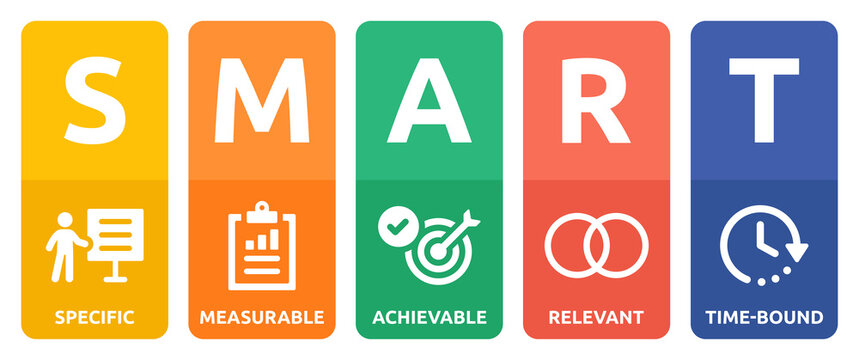
Only after you know what you want and what it costs do you set SMART Goals. This is where you turn the “Why” into the “What.” When researching how to set goals for 2026, you’ll find that specific metrics are the only things that move the needle.
Specific: “Increase income” is a bug. Requirements must be specific actions.
Measurable: You know you’ve succeeded when you hit a specific number or milestone.
Achievable: Focus on things within your control—your skills and your output.
Relevant: Does this goal actually buy you your “Perfect Day”?
Time-bound: Give yourself a “Sprint Deadline.” Without a date, it’s just a dream.
4. Nature’s Seasonal Sync: Sustainability Over Burnout
If you want to master how to set goals for 2026, you must respect your internal seasons. Trees rest in the winter so they can spring to life in the summer and capitalize on the sun. Most people are overworked because they try to be in “Summer Mode” (high output) all year.
Winter (Dec – Feb) – REST: Focus on relationships, sleep an extra hour, and build the vision.
Spring (Mar – May) – CREATE: Test the “how” and see if the new goals are actually sticking.
Summer (Jun – Aug) – WORK: This is the relentless phase. Work hard, sleep less, and prioritize output.
Autumn (Sep – Nov) – ACHIEVE: The final push. We celebrate the wins and transition back to rest.
THE SEASONAL PROTOCOL
A deep dive into Nature’s Productivity Logic. (Link Coming Soon)
5. The Internal Awareness Debugger
Self-awareness is your primary debugger. If you don’t know what you want, you are running someone else’s code. To clear the noise, I take morning walks—no music, no podcasts. I just move and listen. Understanding how to set goals for 2026 starts with knowing your true motivations.
I also identify the “Hell” I am avoiding. What does life look like in 5 years if I do nothing? Then, I categorize my motivations: Petty Reasons (primal ego), Middle Reasons (family), and High Reasons (purpose). You need all three to stay consistent.
6. The Automated Execution Stack: Motion AI and GTD
The final step: Get it out of your head. I use the Getting Things Done (GTD) system paired with Motion AI. Motion takes my tasks and auto-schedules them into time-blocked blocks on my calendar. If you want to know how to set goals for 2026 and actually achieve them, you must remove the friction of scheduling.
TECH STACK REVEAL
How I use Motion AI and GTD to 10x my output. (Link Coming Soon)
Summary: How to Set Goals for 2026 Roadmap
To move from vision to reality, follow these summarized steps from our guide on how to set goals for 2026:
Define the Requirements: Visualize your “Perfect Day” until you can feel it.
Crunch the Numbers: Know the exact cost of your vision so you know what to aim for.
Identify the Bridge: Find the small tasks (like indoor gardening) you can start in your current environment.
Set SMART Waypoints: Break the big vision into measurable, time-bound sprints.
Inbox Everything: Move every task into a GTD system to clear your mental RAM.
Let AI Architect the Schedule: Use Motion AI to automate your time-blocking.
Conclusion: Finish What You Start
The biggest mistake you can make when learning how to set goals for 2026 is spreading yourself too thin. Push through the pain phase. Ignore every other “great idea” until that one thing is finished.
Choose your battles, but focus on your highest priority tasks at the beginning of the day when your energy is high. Your best year yet isn’t something you find; it’s something you architect, install, and—most importantly—finish.